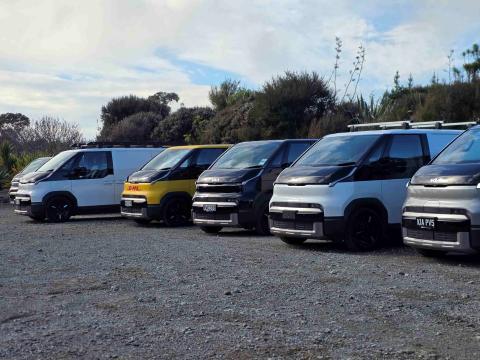



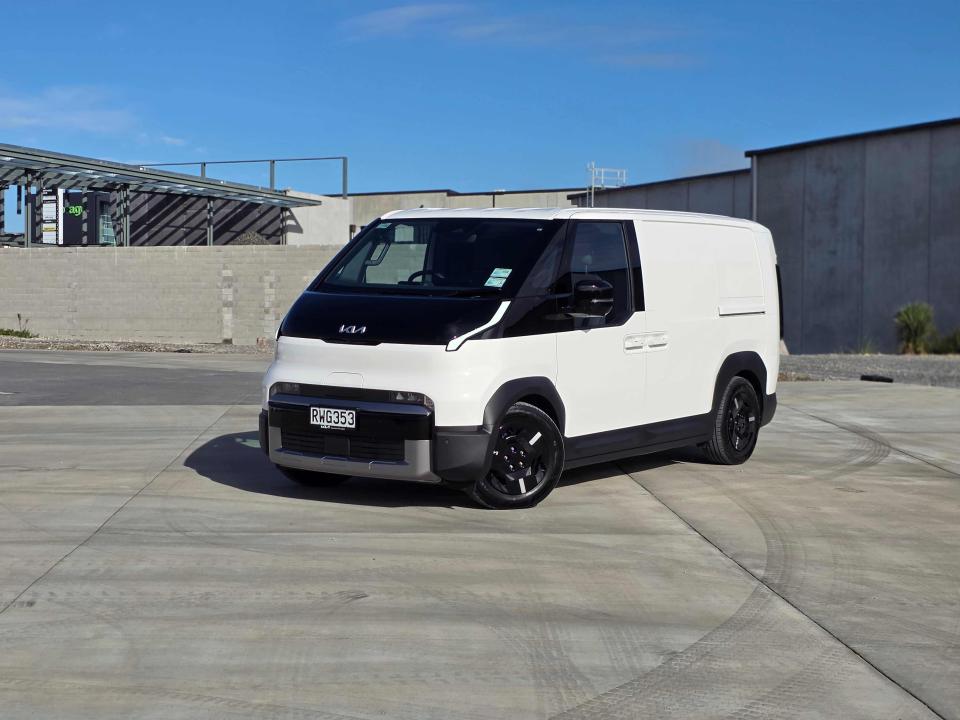
For the modern fleet manager, the commercial van segment has long been a game of compromise. You balance payload against running costs, reliability against maintenance downtime, and driver comfort against budget constraints. But the arrival of the Kia PV5 Cargo feels like a genuine shift in the landscape, it’s a purpose-built tool designed to lower the Total Cost of Ownership (TCO) while simultaneously elevating the driver experience. And after spending time with the PV5, it’s clear that Kia has done its homework on what businesses actually need.
The Fleet Manager’s Perspective - TCO and Reliability
Let’s talk numbers first, because that’s what drives fleet decisions. The PV5 is built on Kia’s dedicated e-GMP platform, and the engineering choices here are clearly focused on longevity and efficiency.
The standout feature is the cell-to-pack NCM battery construction. By removing the casing around individual modules, Kia has increased energy density, delivering a best-in-class 416km (WLTP) range. For a fleet manager, this means fewer charging stops and more time on the road. The energy consumption figure of 19.1 kWh/100km is highly competitive, which directly impacts your bottom line.
Maintenance is another area where the PV5 shines. Kia is offering a 7-year factory warranty with 2-year service intervals—a unique proposition in the New Zealand market that significantly reduces the administrative and financial burden of fleet maintenance.
Furthermore, the modular design of the body panels is a stroke of genius. In the event of a collision, the ability to repair specific sections rather than replacing entire panels keeps the vehicle on the road and out of the workshop, minimizing downtime.
First Drive - Practicality in Motion
Getting behind the wheel, the first thing you notice is the accessibility. The 419mm step height is a genuine ergonomic win. For delivery drivers or tradies who are in and out of the cabin dozens of times a day, this reduces fatigue and improves efficiency.
On the road, the PV5 is composed. The double-wishbone front suspension and coupled torsion beam rear axle provide a stable platform, even when unladen. It handles city traffic with the agility you’d expect from an EV, and the 120kW motor provides ample torque (250Nm) for urban stop-start driving.
Visibility is often a pain point in cargo vans, but Kia has mitigated this with a suite of safety tech. The Blind Spot View Monitor is a standout; it projects a camera feed onto the dashboard when you indicate, which is invaluable when you don't have rear windows. Combined with the Surround View Monitor and Rear Cross Traffic Alert, the PV5 makes maneuvering in tight loading bays or busy depots significantly safer and less stressful for the driver.
Cargo and Customisation
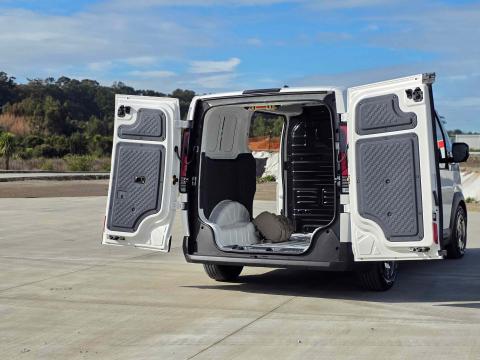
The cargo space itself is well-thought-out. The standard 4.5 cubic meters of volume is highly usable, and the ability to fit two European pallets (or NZ-sized pallets with a raised floor) makes it versatile for a wide range of industries.
For fleets with specific branding requirements, the OEM custom paint option is a major advantage. Being able to order the van in your corporate colors directly from the factory eliminates the need for expensive aftermarket wraps or paint jobs, ensuring your fleet looks professional from day one.
Looking ahead, the high-roof variant arriving in early 2027 will be a game-changer for those needing extra volume (1.8m interior height) and the convenience of a walk-through bulkhead door.
Tech That Works for Business
The cabin is where the PV5 feels truly modern. The 12.9-inch infotainment screen running Android Automotive OS is a significant upgrade over the dated systems found in many competitors. It’s fast, intuitive, and native Google Maps integration means drivers don't need to rely on their smartphones for navigation.
For fleet managers, the real value lies in the connectivity. With 33 individual ECUs, the over-the-air (OTA) update capability is a massive advantage. It ensures the vehicle’s software remains current without requiring a trip to the dealer. Additionally, the future-proof app store will allow companies to integrate their own fleet management software directly into the vehicle’s interface, streamlining communication between the depot and the driver.
The Vehicle-to-Load (V2L) capability is another practical inclusion. Having a 3-pin plug in the cargo area allows drivers to power tools or equipment on-site, effectively turning the van into a mobile power station.
Summing Up
The Kia PV5 Cargo is a compelling proposition for any fleet manager looking to transition to electric. It addresses the core concerns of the commercial sector: reliability, low running costs, and driver safety, while offering a level of tech integration that makes the daily grind easier.
With its best-in-class range, flexible charging options (including the 22kW upgrade for high-usage fleets), and a warranty package that provides genuine peace of mind, the PV5 isn't just a van, it’s a strategic asset. If you’re looking to future-proof your fleet, the PV5 deserves a serious look.